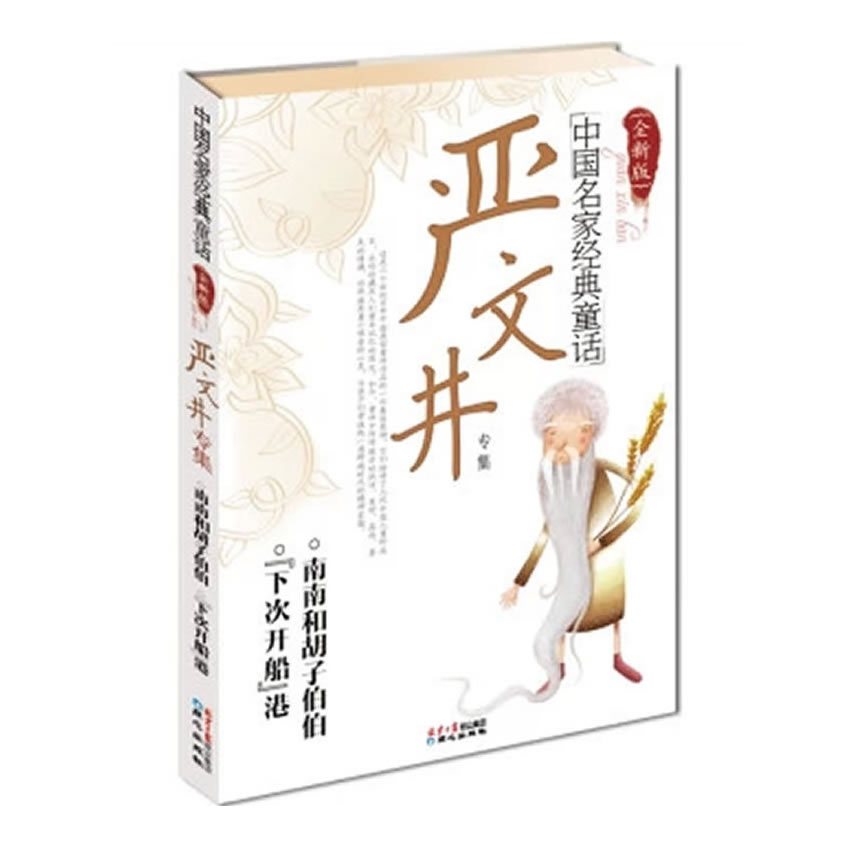
The "Classic Fairy Tales of Chinese Famous Masters" series is a collective debut of original fairy tale works from China over the past century. They have accompanied the growth of several generations of Chinese children and will forever be cherished in the depths of people's childhood memories. Nowadays, the pure, beautiful, noble, and kind grass conveyed in fairy tales still nourishes the hearts of young readers and creates a spiritual home that transcends time for children. This book is the "Yan Wenjing Collection" of "Classic Fairy Tales of Chinese Famous Masters". The "Yan Wenjing Collection" includes two parts: "Next Ship to Port" and "Nannan and Uncle Beard".
Author's Profile
Yan Wenjing, a Chinese writer. Originally named Yan Wenjin. He is from Wuhan, Hubei. Born on October 15th, 1915. Graduated from Hubei Provincial Senior High School in 1934 and worked at Beijing Library the following spring. In 1938, he went to Yan'an Anti Japanese Military and Political University to study, and at the end of the same year, he was transferred to teach at the Literature Department of Lu Xun Academy of Arts. Since 1953, he has successively served as the Deputy Secretary of the Party Group of the Chinese Writers Association, Secretary of the Secretariat of the Writers Association, Editor in Chief of People's Literature, and President of People's Literature Publishing House. Early creations mainly focused on prose and novels, including a collection of essays such as "Mountain Temple Twilight" and a novel called "One Person's Troubles". After entering the 1940s, he mainly wrote children's literature. The first collection of fairy tales, "Nan Nan and Uncle Beard," was published in 1941. Afterwards, he also published short and medium fairy tales such as "Tintin's Strange Journey", "The Story of Earthworms and Bees", "Three Proud Kittens", "Tang Xiaoxi at the Port of 'Next Ship'", as well as fairy tale collections such as "Songs of Little Streams". His works have vivid stories, clever ideas, rich philosophy and poetry, and are praised as a "special poetic style dedicated to children".