|

|
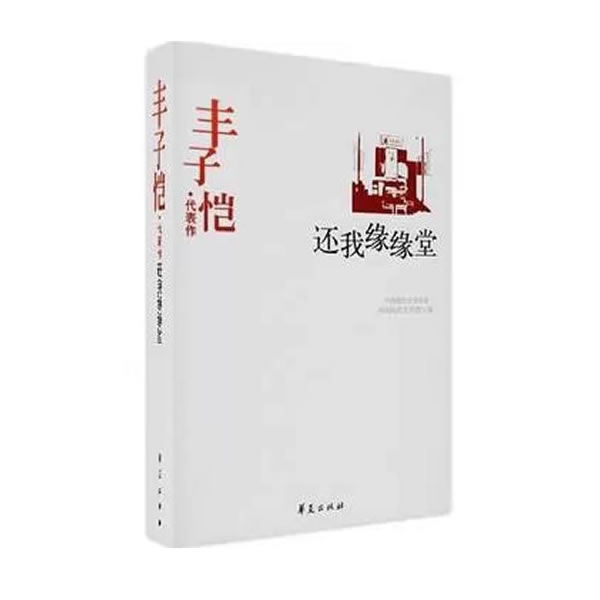
[Name] Feng Zikai's Representative Work - Return My Destiny Hall
【 Author 】 Edited by Feng Zikai
Huaxia Publishing House
【 Open 】 16 open
[Page] 226 pages
【 Size and Weight 】 0.56kg
ISBN number: 978758014371
|
Feng Zikai's Biography
gradually
Something happened in Tokyo one night
Hua Zhan's Diary
For my children
Big ledger
Recalling childhood memories
autumn
The death of Bohao
Thoughts on Lida's 5th Anniversary Commemoration
My hard-earned learning experience
child's play
Humble alleys
Two
Father North
Thirteen Random Thoughts
Memories of Learning to Draw
eat sunflower seeds
蝌蚪
Guest's speech
Two disturbances
Outdoor hair salon
meaty legs
Sending off life
Sending Abao out of the Golden Age
Talk about your own paintings
willow
Carriage Society
Half of the Journey to Moganshan
山中避雨
One of the observations in the Music Research Association
Painting Ghosts
home
my mother
Return me to Yuanyuan Hall
Caring for fellow citizens
The Spirit of Heaven in the Hall of Destiny
Laborers sing by themselves
Buddha without spirit
China is like a big tree
Ci Yuan Yuan Tang
Tonglu Negative Xuan
……
List of Major Works by Feng Zikai
.....
Modern Chinese literature generally refers to the literature from around the May Fourth Movement in 1919 to the establishment of the People's Republic of China in 1949, spanning about 30 years. 30 years in the history of a country's literary development may seem sudden, but the literary history of these 30 years cannot be ignored. In the earth shattering era of great changes, the collision and integration of Chinese and Western civilizations, and the arduous journey of searching for life, not only did many great writers and timeless works emerge, but their literary mainstream has also accumulated passion and trends for today's Chinese literature since then, becoming the prelude to today's Chinese literature. Initially, the May Fourth New Literature Movement became the precursor to the New Democratic Revolution. During this period, literature not only promoted the return of literature to the people and real life through the advocacy of vernacular language, but also differed greatly from the style of old democratic literature in terms of content, that is, holding high the revolutionary banner of thorough anti imperialism and anti feudalism. Among them, the great banner bearer of the New Culture Movement, Lu Xun, had a tremendous impact on his creative works. A group of outstanding writers, with their rich creative achievements, promoted the formation of realism and romanticism, laying a great foundation and pioneering for the development of modern Chinese literature. With the emergence of proletarian revolutionary literature as a slogan and the formation of a movement, especially with the establishment of the Chinese Leftist Writers' Alliance, the mainstream of modern Chinese literature has become an integral part of the New Democratic Revolution. Many writers were directly or indirectly influenced by revolutionary ideas and began to consciously use literature as a weapon for the proletarian revolutionary struggle. Progressive writers outside of the "Leftist League" also achieved remarkable success due to their adherence to the people's standpoint and realistic creative path, integrating into a progressive literary torrent and promoting the maturity of modern Chinese literature, presenting a prosperous, complex, and abundant pattern of literature at that time. After the Marco Polo Bridge Incident, the precarious situation of the country further stimulated the writer's sense of concern for the country. With the establishment and development of the liberated areas, the literary and artistic movement in the liberated areas also flourished. Comrade Mao Zedong's speech at the Yan'an Forum on Literature and Art formulated the line and policies of the revolutionary literary and artistic movement, providing a profound answer to the long-standing development of revolutionary literature since the May Fourth Movement ....