|
|
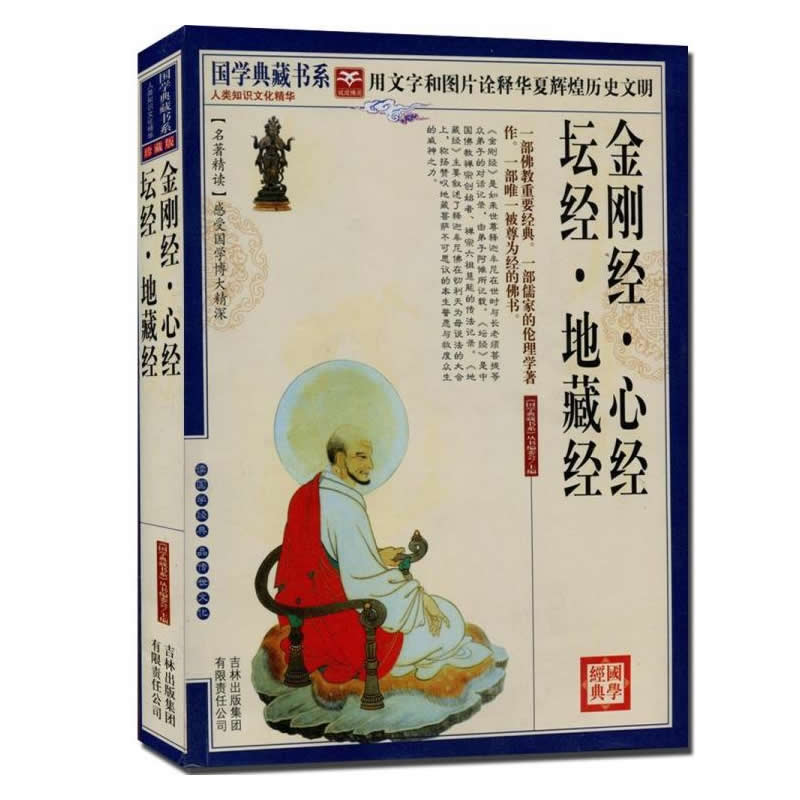
【 Name 】 Diamond Sutra, Heart Sutra, Altar Sutra, Ksitigarbha Sutra
[Author]
Jilin Publishing Group Co., Ltd
【 Open 】 16 open
[Page] 308 pages
[Size and Weight]
ISBN number: 9787546347127
|

Diamond Sutra
The reasons for the first product law will be divided into
Second grade goodness is now open. Please divide
The third rank Mahayana upper sect
The fourth wonderful journey has no place to stay
The fifth grade is based on principles, reality, and distinction
Sixth grade Zhengxin Rare Score
Seventh grade, no gain, no say
Eighth grade legal birth score
9th grade, one phase without distinction
Tenth grade solemn pure land division
Eleventh grade: Wuwei, Fu, Sheng, Fen
Twelfth grade: Respect the Orthodox Church
The 13th grade is held in accordance with the law
Article 14: Separation and Annihilation
The 15th grade of merit points for holding scriptures
The 16th grade is capable of clearing business obstacles
The 17th grade has no distinction between me and others
The 18th grade is integrated with the same observation point
The 19th grade of legal classification
Article 20: Separation of Color and Phase
The 21st grade is not the same as what is said
The 22nd item cannot be scored
The 23rd grade: Pure Heart and Good Deeds
24th grade Fuzhi no score
The 25th grade of chemical composition
Article 26: Non phase Separation of the Dharma Body
The 27th product has no interruption or extinction
The 28th grade is not subject to greed or division
The 29th grade of dignity and silence
The 30th product is a combination of two parts
The 31st grade: Knowing without distinction
The 32nd product should be transformed into non genuine parts
Appendix
The Diamond Sutra - The Greatest Classic of Buddhism
Heart Sutra
Heart Sutra
The Sutra of a Hundred Parables
Tan Jing
Appendix
Ksitigarbha Sutra
Appendix
The Diamond Sutra is an important Buddhist scripture, written in ancient India in 994 BC. It is a record of the dialogue between the Buddha Shakyamuni and his disciples, including the elder Subhuti, during his lifetime, recorded by disciple Anu. The Heart Sutra can refer to the Mahaprajnaparamita Heart Sutra, which is the least numerous classic work in Buddhist scriptures. Due to its minimum word count, deepest meaning, most legends, and greatest influence, countless artists throughout history have devoted great energy and devout hearts to creating the Heart Sutra into a colorful and diverse work of art. In traditional Chinese medicine, there is a meridian with the same name, namely the Hand Shaoyin Heart Meridian. The Altar Sutra, also known as the "Treasure Altar Sutra of the Sixth Patriarch", is a record of the transmission of Buddhist teachings by Huineng (also known as Huineng), the founder of Zen Buddhism in China. Because it is a scripture preached on the altar, it is called the "Altar Sutra". It is the only Buddhist book in China that is revered as a scripture. The Ksitigarbha Sutra mainly narrates how Shakyamuni Buddha praised the incredible vow of Ksitigarbha Bodhisattva and the divine power of saving sentient beings during a conference on the concept of 'Mother of the Earth'. The content includes descriptions of terrifying scenes in hell, analysis of the karma of sentient beings, and the benefits that can be obtained by offering sacrifices to Ksitigarbha Bodhisattva and reciting scriptures.