The First Escape from Death
Chapter One Era
Chapter 2 Postal Vehicle
Chapter 3 Illusion
Chapter 4 Preparation
Chapter 5 Tavern
Chapter 6 Shoe Maker
The Second Golden Silk Thread
Chapter 1: Five Years Have Passed
Chapter 2 Spectator
Chapter 3: Good deeds are rewarded with good deeds
Chapter 4 Blessings
Chapter 5: Assistant
Chapter 6: Many Pursuers
Chapter 7: The Marquis in the City
Chapter 8: The Marquis in the Countryside
Chapter 9: Snake Haired Female Monster
Chapter 10 Commitment
Chapter 11: Between Friends
Chapter 12: Withdrawing from Difficulties
Chapter 13: Confession
Chapter 14 Tomb Robbers
Chapter 15 Weaving
Chapter 16: Continuing Weaving
Chapter 17 Memories
Chapter 18: Out of Control
Chapter 19: Targeted Treatment
Chapter 20: A Request
Chapter 21 Echo
Chapter 22: Great Happiness
Chapter 23: Igniting a Fierce Fire
Chapter 24: Attracting Magnetic Reefs
The Footprints of the Third Storm
Chapter 1 Secret Detention
Chapter 2 Sharpening Wheel and Grinding Wheel
Chapter 3: Shadows
Chapter 4: Stay calm in the face of change
Chapter 5 Appointment
Chapter 6: Innocent Release
Chapter 7: Returning to Prison
Chapter 8: Battle of Cards
Chapter 9 Decision
Chapter 10 Accusation
Chapter 11: The Endless Night
Chapter 12: Long and Endless Night
Chapter 13: Fifty Two
Chapter 14: Evil has its retribution
Chapter 15: The Disappearance of Footnote

Author's Profile
Dickens, Charles Dickens(1812~1870), Born in Portsmouth, England in 1812. My father leads an unrestrained life and is heavily in debt. Young Dickens was forced to become an apprentice in a leather shoe oil shop and endured hardships. When Dickens was 16 years old, his father was imprisoned for debt. From then on, their lives became even more tragic. On the one hand, the Industrial Revolution brought prosperity to major cities in early 19th century England, but on the other hand, it brought extreme poverty and cruel exploitation of child labor to the common people. The sharp social contradictions and unjust social system made Dickens determined to change his life. At the age of 15, Dickens worked as a copyist and learned shorthand at a law firm, and later worked as a news reporter at a newspaper. While working as a journalist for the Morning Post, Dickens began to publish short plays with satirical and humorous content, mainly reflecting life in London, gradually gaining fame. He understands the lives and customs of the lower class people in the city, which is reflected in his passionate writing. Afterwards, he worked as an editor, chief editor, and publisher in various magazines, publishing dozens of long and short stories, including "Oliver Twist," "A Christmas Carol," "David Copperfield," and "Great Expectations. Dickens' works are mostly based on events related to his own personal experiences or observations. He exposed the shocking living system of the workhouse in his book, uncovered the terrible secrets of the lower classes of British society, and vividly depicted the darkness and evil of society. At the beginning of this book, it depicts the protagonist Oliver being born an orphan and living a miserable life in a workhouse. Later, he was forced to become an apprentice at a funeral home and ran away from home due to unbearable abuse. After arriving in London alone, he fell into the hands of thieves again. Dickens extensively depicted the dark social reality in his works, showed deep affection for the common people, and mercilessly criticized the social system of the time. He has outstanding achievements in the realism of novel description and the personalization of characters. He became the writer with the most characters in his works after Shakespeare.
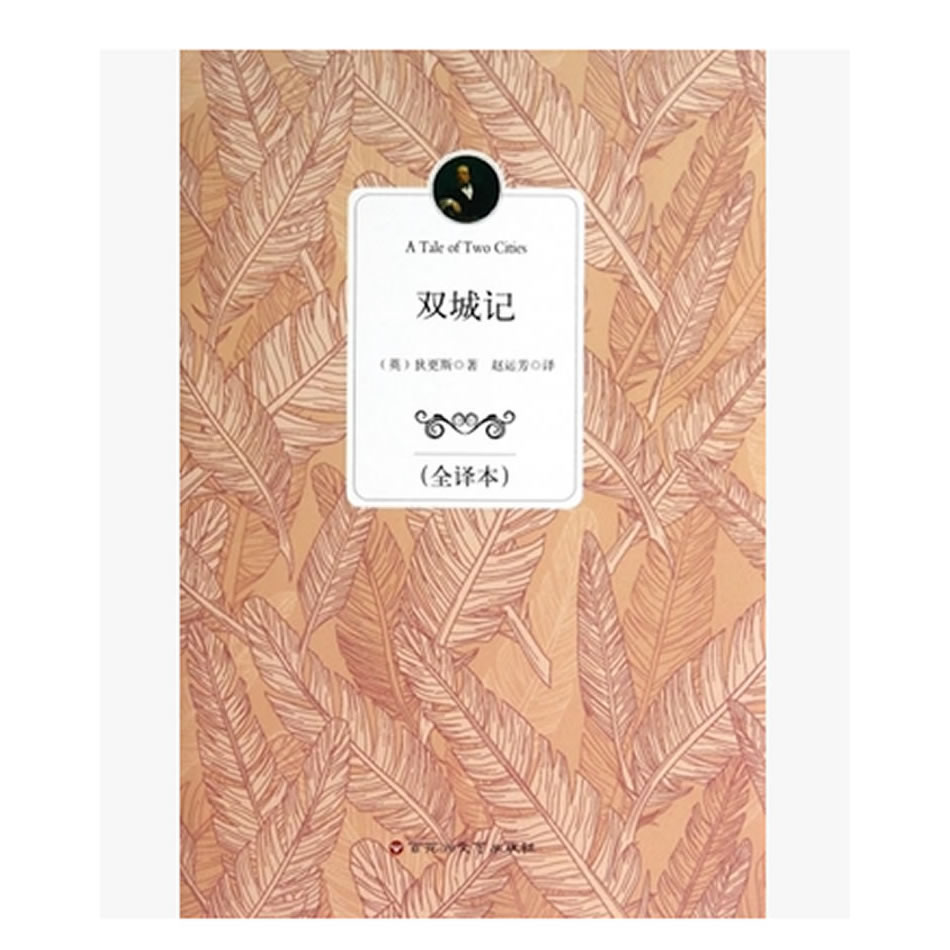
The book "A Tale of Two Cities (Complete Translation)" written by Dickens tells the story of the famous doctor Manette who accidentally witnessed the atrocities committed by the feudal aristocrats, the Evremonde brothers, during the French Revolution. He was thrown into the Bastille and imprisoned for fighting injustice Banned for eighteen years. After being released from prison, Manette's daughter Lucy fell in love with her enemy's nephew Darnay. So, in the vortex of revolution, the family's grudges and grudges were solemnly staged, and good, evil, life, and death blended in conflicts, changing in an instant... "A Tale of Two Cities" has a strict structure, concise language, and Dickens' deep thinking on revolution and human nature, as well as his astonishing writing talent, are fully displayed in it.