|
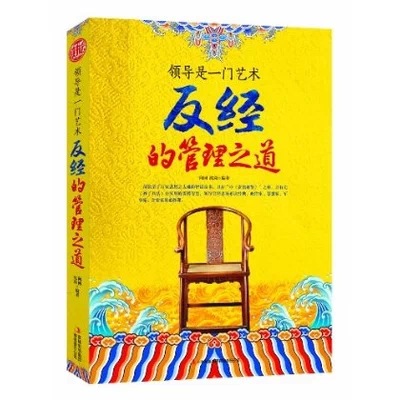
Title: Leadership is an Art The Management Way of Reversal
Original price: 39.9 yuan
Author: Zhao Rui (Tang Dynasty), Xiang Hui, edited by Shen Chen
Publication date: November 1, 2013
ISBN:9787553429656
|
Basic Information
Title: Book Club 2- Leadership is an Art The Management Way of Reversal
Original price: 39.9 yuan
Author: Zhao Rui (Tang Dynasty), Xiang Hui, edited by Shen Chen
Publisher: Jilin Publishing Group Co., Ltd
Publication date: November 1, 2013
ISBN:9787553429656
Word count: 440000
Page number: 319
Version: 1
Binding: Flat
Format: Large 16 format
Product weight:
Abstract
The Anti Confucianism, written by Zhao Rui of the Tang Dynasty, is a brilliant book that combines the thoughts of Confucianism, Taoism, Legalism, Militarism, Miscellany, and Yin Yang. The book currently consists of nine volumes and 64 articles, specifically discussing the ways of emperors and kings in governing the world. Its main content is to discuss how to consolidate the foundation of rule, reform current problems, and solve a series of practical problems in social and political affairs. Due to its unique perspective and emphasis on summarizing historical experience from the negative side, the book is known as the 'Anti Classics'. Also, because it mainly talks about imperial power and strategy, and has the ability to govern the country, some people compare it with Sima Guang's "Zizhi Tongjian" and call it the "Small Zizhi Tongjian".
The book "Anti Confucianism" extensively collects historical facts from various dynasties, not only deeply analyzing the gains and losses of the strategies of monarchs and ministers, but also striving to highlight the strange and unconventional strategies of the British monarch and good ministers. It not only explores the theory, but also balances the strategies. At the same time, there are evaluations of historical figures and reflections on their experiences and lessons learned. Although it is a work from thousands of years ago, it contains rich life wisdom, especially in the aspects of business decision-making, personnel selection, business public relations, and even interpersonal relationships in our current enterprise management. It has strong reference significance and provides profound enlightenment, making it a leading and interdisciplinary work.
A leader running a business is like drawing an artwork, so people often say 'leadership is an art', and 'The Classic of Changes' is like a pair of hands, holding the leader's hand, helping us to manage this art more perfectly.
catalogue
Chapter 1: What Good Leaders Often Do
To occupy one's position, one should strive for it
Cultivate oneself, the beginning of treating others
Being kind and distant is for a wise ruler
Leaders should dare to take responsibility
Only by strategizing can we win a thousand miles
I am personally involved in everything, and there are no generals under my command
Valuing one's own style is to cultivate combat effectiveness
Without good systems, it is a disaster for enterprises
It is better to persuade people with virtue than to oppress them with power
It's not necessary to use it, because people make things happen
Chapter 2: Selecting Talents and Building the Prosperity of Enterprises
The ability of leaders to recognize people is related to the prosperity of enterprises
When selecting personnel, it is important to grasp the characteristics of the talent
When selecting candidates, it is important to have a comprehensive understanding of the talents
Skills for acquiring talent through examination
Leaders need to search for talents extensively
People are not impossible to judge by appearance
Unrestricted pursuit of talent
Skills for selecting outstanding talents
Chapter 3: Utilizing Talents for a Bright Future for Enterprises
Use people to apply their strengths
Leaders still need to avoid weaknesses
Clarify the responsibilities of employees
There are no useless people
Using short as long is also a technique
Do your subordinates only know how to flatter
Reuse talented individuals
Personnel need to distinguish between loyalty and treachery
Chapter 4: The Use of Power also Requires Skills
Learn to adapt according to the situation
Do not abuse power for personal gain
Pay attention to examining subordinates and timely select the best and eliminate the worst
Techniques for maintaining one's own status
Taboos of using power
Never let subordinates monopolize power
Chapter 5: It's better to say good than to say bad, and it's better to say good than to say clever
Persuading others to focus on the key points
Being proud as a gift can bring honor to others
Understand the psychology of subordinates first before persuading them
How to master the psychology of the opponent in a conversation
Be mindful of speaking appropriately
When you're not right, it's hard to speculate
Create a discourse of 'solidarity in times of difficulty'
The conversation should hit the other person's weak point
Consistency in words and actions is the key to gaining trust
Chapter 6: Success and Defeat, Decision Making Comes First
Chapter 7: Managing Subordinates with Clear Rewards and Punishments
Chapter 8: Understanding Flexibility is the Key to Adapting to Changes with Constant Changes
Chapter 9: Establishing the Reputation of "Wind Meets Wind, Rain Meets Rain"
Chapter 10: How to Open up New Prospects for Newly Appointed Officials