|
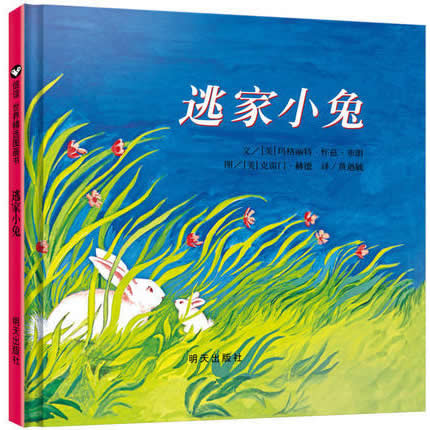
Product Name: Xinyi World Selected Picture Book: Escape Home .. Is it a set: No Title: Selected Picture Books from Xinyi World: Escape Little Rabbit Pricing: 21.80 yuan Publisher Name: Tomorrow Publishing House Publication date: January 2009 Author: (American) Herder; Translated by Huang Yuyu Author Region: United States Translator:; Huang Yuyu Editor: None Format: 24 Title: Selected Picture Books from Xinyi World: Escape Little Rabbit ISBN number: 9787533258658 |
Basic Information
Publisher: Tomorrow Publishing House; First edition (November 1, 2008)
Series Name: Selected Picture Books from Xinyi World
Hardcover: 48 pages
Text language: Simplified Chinese
Format: 24
ISBN:7533258657, 9787533258658
Barcode: 9787533258658
Product size and weight: 20.4 x 17.2 x 1 cm; 222 g
ASIN:B001O2HFLU
Market price: 21.8¥
Product description
Synopsis
The novel 'Escape Rabbit' always brings a peaceful and pleasant feeling to young readers. Because almost every young child has fantasized about leaving home like a little rabbit in a game to test their mother's love for them, and this little rabbit's experience is like their own game, bringing them an indescribable sense of security. Simple yet full of charm and poetic charm, a bedtime story that makes children feel warm.
Editor's Pick
Escape Rabbit "is a classic work in the children's book industry that transcends time and space! After 60 years of publication, it remains the most popular picture book for mothers to read together with their children on Amazon's online bookstore! Let generation after generation of parents read this heartwarming and lovely story to their children before they go to bed, thanks to Clement's paintings.
Clement painted two rabbits, one big and one small, both realistically and romantically, with creative connections and handling of the images. You see, when the little rabbit said, 'If you come after me, I will become a small trout in the stream and swim far away,' and his mother said, 'If you become a small trout in the stream, I will become a fisherman to catch you,' there were two black and white pen drawings, and the two pages that followed immediately merged into one, creating a panoramic, horizontally long colored cross page with no dialogue, only a vivid and imaginative scene - the little rabbit turned into a fish in the river, his mother wearing black boots, holding a fishing basket in one hand, and throwing the fishing rod out with force in the other hand. What was funny was that the hook was tied to it. It's a bright red carrot. This kind of interweaving not only pushes the story to climax time and time again, but also expands children's imagination to an infinite space.
It must be admitted that this is an impeccable picture book.
Media recommendations
Love's "hide and seek" by Peng Yi (writer and picture book researcher)
Don't underestimate this picture book published in 1942, its authors are pioneering figures in the American picture book industry, Margaret and Clement! The school library magazine in the United States rated it as the "best of the best" children's book from 1966 to 1978, and also included a recommendation: "The fascinating dialogue between the rabbit mother and the little rabbit, full of charm, constitutes a poetic little story. In the future, this little book may become an immortal classic for children's reading
In fact, before this, it had already become a well-known classic in the United States.
More than sixty years have passed, and in 2002, the United States also released a "60th Anniversary Edition" with a golden medal on the cover. Today, 'Escape Little Rabbit' has become a classic among children's books.
Margaret has her own creative philosophy, and her children's literature creation, as she once said, is "to write a simple book... so that children can have a moment to free themselves from the troubles of life trivialities such as tying shoelaces... and come to an eternal fairy tale world
This time, she told a simple story about a little rabbit and its mother playing hide and seek with language.
This story couldn't be any simpler, so simple that there were only a few dialogues left, but it was these dialogues that fascinated people all over the world.
Without any prior warning, one day a little rabbit suddenly announced to his mother that he was going to "run away" - although later we found out that it was not due to his rebellion or any grievances, he just wanted to know how much his mother loved him - but we couldn't help but admire this clever and open-minded mother. She wasn't surprised, and didn't even ask why, but instead said, "If you run away, I'll go after you because you're my little baby!" Then, a joyful and peculiar chase game unfolded in her imagination began. The little rabbit travels from heaven to earth, but whether he dresses up as a fish in a small river, a flower in a garden, a stone on a high mountain, or a little bird, the mother chasing after him always manages to catch him. Finally, the little rabbit got tired of running away and snuggled up next to its mother, saying 'I won't run anymore,' so its mother fed it a carrot symbolizing love.
As evaluated in a book review, 'The Little Escape Rabbit' always brings a peaceful and pleasant feeling to young readers. Because almost every young child has fantasized about leaving home like Barney in a game to test their mother's love for them, and this little rabbit's experience is like their own game, bringing them an indescribable sense of security.
The story of "Escape Bunny" has inspired generation after generation of parents to read this heartwarming and adorable tale to their children before they go to bed, thanks to Clement's paintings.
Clement painted two rabbits, one big and one small, both realistically and romantically, with creative connections and handling of the images. You see, when the little rabbit said, 'If you come after me, I will become a small trout in the stream and swim far away,' and his mother said, 'If you become a small trout in the stream, I will become a fisherman to catch you,' there were two black and white pen drawings, and the two pages that followed immediately merged into one, creating a panoramic, horizontally long colored cross page with no dialogue, only a vivid and imaginative scene - the little rabbit turned into a fish in the river, his mother wearing black boots, holding a fishing basket in one hand, and throwing the fishing rod out with force in the other hand. What was funny was that the hook was tied to it. It's a bright red carrot. This kind of interweaving not only pushes the story to climax time and time again, but also expands children's imagination to an infinite space.
It must be admitted that this is an impeccable picture book.
Author's Profile
Author: (USA) Margaret Wise Brown (USA) Clement Hurd Translator: Huang Naiyu
Margaret Watts Brown was born in New York in 1910. Huaizi "is a transliteration of the English word" smart ". Margaret is a legendary woman of exceptional intelligence and talent. She not only wrote over 10 children's books for children, but also, together with a group of friends, opened up a world of influence for the education, creation, and publication of children's literature. Although she has never been married and has no children of her own, she has a profound understanding of the psychology, emotions, and interests of children, especially those in early childhood. She is skilled at using concise, playful, and melodious beautiful words to narrate stories, which not only deeply touch children's hearts but also develop their imagination, allowing them to create their own poetry and prose. In 1952, 42 year old Margaret passed away suddenly while traveling in France. Clement Hurd was born in New York in 1908. After graduating from Yale University, he went to Paris to study modern painting for two years and became a decorative painter after returning to China. Later, he met children's literature workers such as Margaret and married one of them, Ada. After seeing his two works, Margaret strongly urged him to create illustrations for his paintings, calligraphy, and painting, and specially wrote a children's story for him called "The Elephant and the Beetle" to give him an attempt at illustration.