- Category:
Philosophy/Religion
- Type:
- Model: 9787208085428
- Color: The Philosophy Of Comprehensive Creation And The Comprehensive Creation Of Philosophy -- A Study Of Zhang Dainian's Philosophical Thought
- Tag: New Series Of Humanities And Social Sciences Books
- Product ID: 100018507
Publisher: Shanghai People's Publishing House; First edition (July 1, 2009)
Series Name: New Books on Humanities and Social Sciences
Paperback: 269 pages
Language: Simplified Chinese
Format: 32
ISBN:9787208085428
Barcode: 9787200885428
Product size: 20.8 x 14.6 x 1.4 cm
Product weight: 299 g
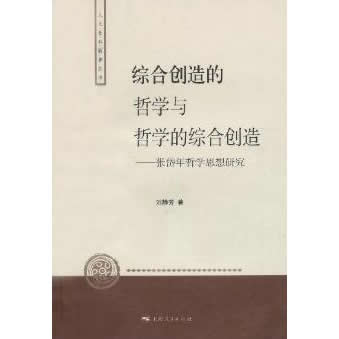
The Philosophy of Comprehensive Creation and the Comprehensive Creation of Philosophy: A Study of Zhang Dainian's Philosophical Thought "is published by Shanghai People's Publishing House.
This book has been repeatedly revised based on my doctoral thesis "Philosophy of Comprehensive Creation and the Comprehensive Creation of Philosophy One - Research on Zhang Dainian's' Five Theories of Heaven and Man '". Since considering this issue in 2001, I have received a lot of help in academia. Firstly, my supervisor Mr. Chen Weiping spent a lot of time and energy on the topic selection, ideas, and revisions of the paper. In addition, many of Mr.'s insights also constantly give me a sense of enlightenment. The process of submitting the completed paper to experts for review has also benefited me greatly. In the writing process of this book, many experts' opinions have been incorporated. Here, we would like to express our gratitude to Mr. Hu Jun, Mr. Jiang Guobao, Mr. Li Weiwu, Mr. Li Zonggui and others! During the thesis defense, the critical opinions of professors Pan Fuen, Yang Guorong, Pan Derong, Gao Ruiquan, and others from the defense committee further improved the book. After the thesis defense, Mr. Pan Fuen specifically talked about his study under Mr. Zhang Dainian back then and sent me a photo of Mr. Zhang Dainian that he had kept. The demeanor of senior scholars is admirable.
In addition to the gentlemen mentioned above, I would like to express my special thanks to Mr. Li Cunshan. After completing my doctoral thesis, Mr. Li handwritten several pages of review comments in small Kai script. On the one hand, he affirmed my research, and on the other hand, he pointed out many shortcomings of the paper. After the paper was written, he took the time to read through the electronic manuscript and sent letters back and forth multiple times, offering many revision suggestions.
Liu Jingfang was born in Heilongjiang in 1967. I obtained a PhD in Philosophy from East China Normal University in 2005. I love the current Philosophy Department at Shanghai University. My main research direction is Chinese modern philosophy. Has published relevant papers in journals such as "History of Chinese Philosophy" and "Academic Monthly".
Introduction
Chapter 1: Comprehensive Creation: From Culture to Philosophy
Section 1: Comprehensive Creation of Culture and the Total Westernization and Oriental Culture Schools
1、 Criticize the vague ways of thinking of the Eastern Culture School and the Total Westernization School
2、 Undoubtedly, both Chinese and Western cultures have homogeneity, as well as differences in ethnicity and era
3、 Abandoning the environmental determinism of the complete Westernization movement and the intention determinism of the Eastern Culture movement
Section 2: Comprehensive Creation of Culture with Philosophy as the Core
Chapter 2 Comprehensive Creation in Methodology: Experience, Analysis, and Understanding
The combination of experience, analysis, and communication in the first section
The second section combines philosophical methods of experience, analysis, and comprehension with other philosophical methods
1、 Experience, Analysis, Understanding, and Dialectics
2、 Experience, Analysis, Understanding, and Intuitive Method
3、 Experience, Analysis, Understanding and Traditional Philosophical Methods
Theoretical significance of comprehensive creation in methodology section three
Chapter 3: Comprehensive Creation in Cosmology: Based on Things and Maximizing Changes
The ontology of "putting things first" in the first section
1、 The principle of "putting things first" and the traditional philosophy of "qi only theory"
2、 The ontology of "putting things first" and the new materialism
3、 'Based on Things' and the Ontology of Modern Neo Confucianism
Section 2: The Cosmological View of Changes and Greatness
1、 The 'Great Three Poles' and the' Boundless and Taiji 'of New Realism
2、 The Comprehensive Analysis of Traditional Philosophy, New Materialism, and New Realism from the Perspective of "Birth and Birth"
3、 The Sublimation of New Materialism, Sudden Evolution, and New Realism from the Perspective of "One Book, Multiple Levels"
The Theoretical Significance of Comprehensive Creation in Cosmology
Chapter 4: Comprehensive Creation in the Theory of Life: "Enriching Life to Achieve Reason"
The Nature of Life: "Heaven and Man are Ultimate"
1、 The Ultimate Harmony between Heaven and Man "and the Traditional Philosophy of" Habit and Nature "and Marxist Theory of Human Nature
2、 The difference between freedom and necessity and the New Materialist
The Course of Life in Section 2: "Harmony and Harmony"
1、 The highest value principle is "harmony"
2、 The Sublimation of the Traditional Philosophy's Doctrine of the Mean by the "Jianhe" Standard
3、 The Application of the "Jianhe" Standard to New Materialism
4、 Criticism of the Value Theory of Chinese New Realists by the "Jianhe" Standard
The third section overcomes the natural pursuit of ultimate goodness: "Enriching life with reason", "Dynamic unity of heaven and man", "Unity with the group"
1、 Enriching Life with Rationality
2、 The unity of heaven and man in motion
3、 Being one with the group
The Theoretical Significance of Comprehensive Creation in the Theory of Life
Chapter 5 Comprehensive Creation in Knowledge Theory: Knowledge as Reality, Three Books of Knowledge, and Three Tables of True Knowledge
Section 1: Issues and Research Methods of Knowledge Theory
1、 The problem of epistemology
2、 Research methods of epistemology
Section 2: The Real Problem of the Outside World: What We Know is Real
1、 Actual external evidence
2、 The difference between Jin Yuelin and Jin Yuelin in external practical issues
3、 The difference between Jin Yuelin and Zhang Dongsun in the relationship between perception and external things
Section 3: Sources and Elements of Knowledge: Three Books of Knowledge
1、 The Comprehensive Creation of New Materialism and Traditional Philosophy in the Issue of Knowledge Sources and Elements
2、 Criticism of Zhang Dongsun's Theory of Knowledge on the Sources and Elements of Knowledge
Section 4: Standards of True Knowledge: Three Forms of True Knowledge
The Significance of Zhang Dainian's Theory of Knowledge in Section 5
Chapter 6: Philosophy of Comprehensive Creation and Research on the History of Chinese Philosophy
Section 1: The Legitimacy of Philosophy of Comprehensive Creation and Chinese Philosophy
1、 Affirming the legitimacy of Chinese philosophy from a philosophical perspective
2、 Affirming the Legitimacy of Chinese Philosophy in Philosophical Form
3、 Affirming the legitimacy of Chinese philosophy from a philosophical perspective
The Content and Methods of Philosophy and Philosophy History Research in the Second Section of Comprehensive Creation
1、 The philosophical perspective of comprehensive creation determines the content of Zhang Dainian's research on the history of philosophy
2、 The philosophical view of comprehensive creation determines the method of Zhang Dainian's research on the history of philosophy
3、 The philosophical view of comprehensive creation determines the stage of Zhang Dainian's research on the history of Chinese philosophy
Conclusion
The uniqueness of the philosophical system created by Zhang Dainian in the first section
1、 The difference from other new materialists at that time
2、 Difference from New Realists
3、 The difference between modern Neo Confucianism and other idealists
The Qualitative and Evaluation of the Philosophical System Created by Zhang Dainian in the Second Section
Appendix 1: Shenfu vs Zhang Dainian: Enlightenment and Construction
Appendix 2: Aisiqi vs Zhang Dainian: Internal Divergence in the Process of Sinicization of Marxist Philosophy
Appendix Three: A Review of Zhang Dainian's Philosophical Thought Research
References