- Category:
Art
- Type:
- Model: 9787208063778
- Color: Modern Chinese Music History
- Tag: Specialized History Series
- Product ID: 100018266
Publisher: Shanghai People's Publishing House; First edition (October 1, 2006)
Series Name: Special History Series Series
Paperback: 422 pages
Language: Simplified Chinese
Format: 32
ISBN:9787208063778
Barcode: 978720863778
Product size: 21 x 14.8 x 2.2 cm
Product weight: 522 g
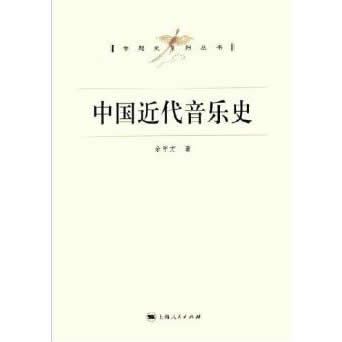
History of Modern Chinese Music: 1840-1949: Special History Series
The term 'modern' in this book refers to the historical period from the Opium War in 1840 at the end of the Qing Dynasty to the establishment of the People's Republic of China in 1949. The establishment of the Republic of China is divided into two parts, describing the historical development of traditional music and emerging music.
Traditional music refers to various forms and cultural spaces of traditional music culture that have been passed down from generation to generation among ethnic and folk groups and are closely related to people's lives, that is, the oral and intangible cultural heritage of human music. This book is based on traditional folk songs, dances, rap, opera, and instrumental music performance arts, and selects some music genres and folk musicians from this period as examples to illustrate. At the same time, it emphasizes their connection with folk customs, religion, worship, ritual music, and emerging music.
Emerging music refers to the "millennium change" in Chinese music, which refers to various music events with new era significance influenced by Western professional music education in the early stage of China's modernization transition.
The compilation of modern Chinese music history originated in the 1930s and 1940s. At that time, left-wing musicians, due to the needs of the situation, compiled a history of the Chinese New Music Movement (lecture notes) with the growth and development of left-wing and salvation music as the main thread. After 1949, the Chinese modern and contemporary music history (textbook) interpreted based on this concept and framework has long been outstanding, reflecting the hardships and immaturity of the discipline's establishment. The expectation and call for the return of the May Fourth tradition in the 1980s after the "Ten Year Catastrophe" demonstrated the rectification and breakthrough innovation brought about by ideological liberation. Since the 1990s, the perspective in the context of globalization has further expanded, and the call for "rewriting music history" has sounded, demonstrating the steady progress of the discipline towards maturity.
Yu Party A, a music teacher at Fudan University. Born in Shanghai in 1949. Graduated from the Theoretical Composition Department of China Conservatory of Music Affiliated Middle School and the Music Department of Shanghai Normal University. I have studied in the Music Department of Shanghai Conservatory of Music and the Music Department of China Conservatory of Music, under the guidance of Chinese music historians Professor Xia Ye and Professor Feng Wenci. I have been engaged in music education at Shanghai Normal University and Fudan University for over 30 years. He has written academic and research achievements such as "A Brief Study on the Evolution of Chu Sound", "Reflections on Music Teaching in Ordinary Colleges and Universities", "Aesthetic Education and the Comprehensive Development and Quality Education of Human Beings", "Illustrated History of Ancient Chinese Music", "School Songs of Modern Chinese Colleges and Universities" (co authored), "Music Appreciation Course" (edited), etc. I am currently a member of the Shanghai Musicians Association, a member of the Chinese Society of Music History, a member of the Music Professional Committee of the Chinese Society of Higher Education, and the director of the Music Teaching and Research Office of the Fudan University Art Education Center.
The Evolution of Traditional Music in the Upward Compilation
1、 The period from the Opium War in the late Qing Dynasty to the Xinhai Revolution (1840-1910)
(1) The prosperity of rap music
(2) The proliferation of traditional Chinese opera music
(3) The prosperity of ensemble instrumental music
(4) The maturity of solo instrumental music
(5) Inheritance of ritual music and religious music
(6) The Evolution of Song and Dance Music and Folk Songs
2、 During the Republic of China period (1911-1949)
(1) The Evolution of Rap Music
(2) The Innovation of Traditional Chinese Opera Music
(3) The evolution of instrumental music
(4) The emergence of new folk songs and dance music
The Rise of Emerging Music
1、 During the late Qing Dynasty and early Republic of China period (1840-1919)
(1) The Introduction of Western Music
(2) Music Activities of Students Studying in Japan and the Initial Stage of New School Music Education
(3) Music activities of Shen Xingong, Zeng Zhizhi, and Li Shutong
(4) The Content and Significance of School Music Songs
2、 From the May Fourth Movement to the Northern Expedition (1919-1927)
(1) New music clubs and the establishment of modern professional music education
(2) Cai Yuanpei's Art Education Theory
(3) The initial collision of ideas in the construction of new music theory
(4) Wang Guangqi's Music Research and Feng Zikai's Music Thought
(5) Xiao Youmei, Zhao Yuanren, Li Jinhui, Liu Tianhua and the Creation of Emerging Music Culture
3、 During the ten-year civil war period (1927-1937)
(1) The Leftist Music Movement and the Anti Japanese Salvation Song Movement
(2) The music compositions of Nie Er, Lv Ji, Zhang Shu, and Ren Guang
(3) Creation of Mass Songs
(4) The musical ideas and creations of Huang Zi, Qing Zhu, and others
4、 During the War of Resistance Against Japan and the War of Liberation (1937-1949)
(1) Mass Song Creation in the Early Stage of the Anti Japanese War
(2) Lu Yi "Music Education and the New Opera" White Haired Girl "
(3) Music creation in base areas and liberated areas
(4) People's musician Xian Xinghai
(5) Songwriting by Mai Xin, Zhang Hanhui and others
(6) Overview of music in the occupied areas
(7) The New Music Movement, Music Education, and Song Creation in the Nationalist controlled Areas
(8) Instrumental music creation in the occupied areas and the Nationalist controlled areas
(9) Tao Xingzhi's Music Art Education Thought and Practice
Main reference materials
Postscript