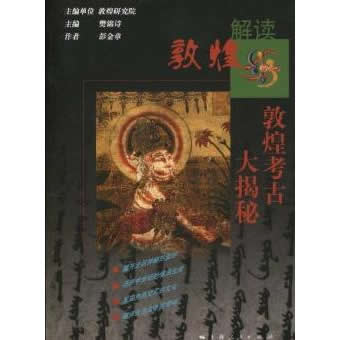
- Category:
Map/Geography
- Type:
- Model: 9787208070882
- Color: Interpreting Dunhuang
- Tag: Interpreting Dunhuang
- Product ID: 100018257
Publisher: Shanghai People's Publishing House; First edition (July 1, 2007)
Book Title: Interpretation of Dunhuang Series
Paperback: 175 pages
Language: Simplified Chinese
Format: 16
ISBN:9787208070882
Barcode: 9787208070882
Product size: 23.6 x 16.8 x 1.4 cm
Product weight: 454 g
Unveiling the Mysterious Veil of Dunhuang Archaeology: Unveiling the Mysterious Veil of the Northern Region, Restoring the Life of Monks in the Middle Ages, Discovering the Cultural Intersection of China and the West, and Cracking Ancient Passwords.
Why are the Mogao Caves divided into the southern and northern regions?
Why is the desolate northern region called the mysterious land?
Why is there a 'second scripture cave' in the northern region?
Why are there major archaeological discoveries in the northern region?
Why were the cultural relics unearthed in the northern region stolen and transported overseas?
Why do Christian relics appear in Buddhist holy sites?
Why is Esoteric Buddhism active in the North District?
Why are many cut skulls found in the northern region
The "Interpretation of Dunhuang Series? Unveiling Dunhuang Archaeology" is a series of books titled "Interpretation of Dunhuang". Scholars from Dunhuang Academy showcase to the world the outstanding artistic achievements created by the Chinese nation in history and the glory of ancient Eastern culture, telling people the prosperity and distant stories of Dunhuang in the past
The "Interpreting Dunhuang" series of books published this time is a set of popular reading materials with novel content and format, jointly completed by senior experts and photographers from Dunhuang Academy, aimed at a wide range of readers. This series of books has three major advantages:
1、 It comprehensively covers the architecture, murals, painted sculptures, and unearthed documents of Dunhuang Grottoes, with a vast system and rich connotations;
2、 The author team, composed of senior experts from Dunhuang Academy, will analyze the mysteries of Dunhuang Grottoes to readers in three major categories: Buddhism, art, and society, using their decades long research results in a comprehensive and easy to understand manner;
3、 More than two thousand exquisite photos taken by senior photographers from Dunhuang Academy showcase the colorful Dunhuang grotto art to readers from all angles and perspectives.
Peng Jinzhang, from Suning, Hebei. Graduated from the Archaeology Department of Peking University in 1963; From 1963 to 1986, he taught at the History Department of Wuhan University, founded the Archaeology major, and served as the Deputy Director of the History Department and Director of the Archaeology Teaching and Research Office.
I have been working at Dunhuang Academy since 1986. Formerly served as the director of the Dunhuang Grottoes Cultural Relics Protection and Research Exhibition Center. Current researcher at Dunhuang Academy, director of Chinese Archaeological Society, and member of Gansu Provincial Cultural Relics Appraisal Committee. Qualified as a leader in field archaeological excavations.
Hosted multiple archaeological excavations, mainly in the northern area of Mogao Grottoes, where important relics and precious artifacts were discovered, receiving high attention from the academic community both domestically and internationally; Lead the excavation of sites such as Mogao Grottoes and Cave 96; Responsible for the excavation of the Suoyang city site and the ancient tombs of Luotuocheng in Gansu Province.
He presided over a number of national scientific research projects and served as the head of the research team of the national "Ninth Five Year Plan" social science key scientific research project "the Mogao Grottoes of Dunhuang North Caves Archaeology Research" and the 2002 major project of the Ministry of Education's Humanities and Social Sciences Key Research Base "Dunhuang Grottoes Case Study". In addition, conduct systematic research on Dunhuang Esoteric Buddhism.
In recent years, academic monographs published at home and abroad include the Mogao Grottoes of Dunhuang in the North Area (three volumes), and the Complete Collection of Dunhuang Grottoes in Esoteric Painting. The main papers include dozens of articles, such as New Archaeological Discoveries of the Mogao Grottoes of Dunhuang, Archaeological Chronicles of the Northern Area of Mogao Grottoes, Ten sided Guanyin Sutra Changes in Cave 14 of Mogao Grottoes, and Ten sided Eight armed Guanyin Textual Research in Cave 76 of Mogao Grottoes.
Introduction
Chapter 1: The Desolate and Mysterious North Area of Mogao Grottoes
Why is the Mogao Grottoes divided into the southern and northern regions?
2. There are 248 caves preserved in the northern area of Mogao Grottoes, why were only 5 caves originally numbered?
What are the differences between the caves in the North and South districts?
4. Are the broken and rotten caves in the northern district the residences of painters and sculptors?
Did there originally be murals and sculptures in the caves of the North District?
Why was the only Tibetan esoteric cave in Dunhuang Grottoes excavated in the remote northern region?
Is there really a second scripture cave in Mogao Grottoes?
Chapter 2: The Northern District of Mogao Grottoes, which has been repeatedly robbed
1. Did Chinese or foreigners first enter the northern area of Mogao Grottoes in modern times?
2. Where are the cultural relics stolen by the Frenchman B é ch é and in the northern region currently stored?
Where are the cultural relics looted by the Russian Odenburg in the northern region currently stored?
4. "Princess feet" were discovered by remnants of Tsarist Russia in the northern region?
Did Zhang Dagan discover the 'General's Hand'?
Where is the current collection of cultural relics excavated by Zhang Dagan in the northern region?
Chapter 3: Report from the Excavation Site
Why do the caves in the northern region need to be completely renumbered?
How do archaeologists investigate and map caves in the northern region?
How much do you know about the dust of history?
What are the differences in excavation methods between the northern and southern caves of Mogao Grottoes?
How did ancient monks walk between steep cliff caves?
Did the excavation of caves in the northern region occur later than in the southern region?
Chapter 4: Uncovering the Dusty Life of Monks
Where do the monks in Mogao Grottoes practice Zen?
Where do the monks of Mogao Grottoes live?
Why are there animal bones and leather remaining in the caves where monks reside?
Can monks live with their families in the monastery? Can monks live at home?
How are monks buried in caves?
Why are many cut skulls found in burial caves?
7. Are some depictions of pagodas and Buddha statues made from the ashes of monks?
Do monks have dedicated storage rooms?
Is there a wealth gap among the monks in Mogao Caves?
How do monks live their daily lives?
11. Do the monks in Mogao Caves have salaries or personal money?
Chapter 5: Searching for the Password to Crack Excavated Documents
Is there a workshop for printing Buddhist scriptures in the North District?
Is the Western Xia movable type printed material unearthed in the North District the world's only edition?
Is the Western Xia Tripitaka unearthed in the northern region the only one in China?
Who copied the Chinese Buddhist scriptures?
5. Who compiled the bilingual dictionary of Western Xia and Chinese?
What popular Western Xia literature have been discovered in the northern region?
Why does the Uyghur wooden movable type unearthed in the northern region have extremely high research value?
What important information is recorded in the Uyghur documents discovered in the northern region?
What important information is recorded in the Tibetan documents discovered in the northern region?
What important information is recorded in the Uyghur Mongolian and Basiba scripts discovered in the northern region?
Chapter 6 Discoveries Outside the Buddhist Sect
Why were Christian Syriac Bibles and bronze crosses unearthed in Buddhist holy sites?
Did the Persian silver coins unearthed in the northern region ever circulate in Dunhuang?
Why were Western Xia iron coins and Song Dynasty coins unearthed in the same cave?
Why were Taoist scriptures discovered in Buddhist temples?
Why was the Chinese version of the "Zizhi Tongjian" discovered in Buddhist temples?
Chapter 7 Archaeological Discoveries Reveal the Mystery
Is the North District an active area for esoteric Buddhism?
2. Where do the monks in Mogao Grottoes come from? Are there any foreign monks practicing in the northern region?
Where did the painters and sculptors of the ancient Mogao Caves live?
Chapter 8: Reflections on Environmental Protection
Why are there no architectural sites preserved on the cliffs in the northern region?
Why is the discovery of Chinese language documents from the 30th year of the Yuan Dynasty in the northern region very important?
Why is Daquan River called the River of Life in Mogao Grottoes?
How does atmospheric precipitation cause damage to caves in the northern region?
Can modern technology prevent damage to grottoes caused by the natural environment?
Appendix I Classification of Grottoes in the North Area of the Mogao Grottoes of Dunhuang
Appendix 2 Dunhuang Chronicle