- Category:
Literature
- Type:
- Model: 9787208072381
- Color: Jade Dust Collection
- Tag: Jade Dust Collection
- Product ID: 100018251
Publisher: Shanghai People's Publishing House; First edition (August 1, 2007)
Paperback: 169 pages
Format: 32 format
ISBN:9787208072381
Barcode: 978720072381
Product size: 20.6 x 14.6 x 1.2 cm
Product weight: 322 g
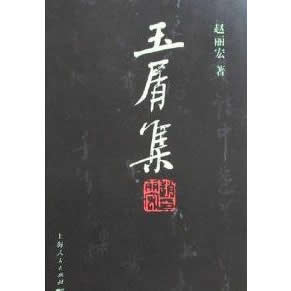
These articles in "Jade Fragments Collection" are a column written by the author for the supplement of "Xinmin Evening News" Night Light Cup. Since the beginning of 2006, they have been written once a week for more than a year. Since the establishment of this column, I have continuously received letters from readers, and many readers have also come to bookstores to inquire about when books will be published.
The text in "Jade Chip Collection" is a collection of articles from the "Jade Chip Collection" column over the past year. From the perspective of modern people, 'spring grass grows in the pond' seems to have a common artistic conception, and the lyrics are also simple and straightforward. Why has it become a famous saying throughout history? In the minds of ancient poets, these five words were simply a genius discovery and creation, the most wonderful portrayal of spring. Where is the novelty of the five characters' Five New 'for eternity? Obviously, no one had described spring in this way before Xie Lingyun. In the Book of Songs, it is written about spring colors as follows: "The spring days are long and slow, the flowers and trees are lush, the granaries are full of joy, and the fans are gathered." It also describes plants, trees, ponds, and the chirping of birds and warblers, which is a direct description, with sound and color, and one can feel the rippling spring scenery. In the Han Yuefu, there are also many beautiful sentences describing spring scenery. In the Jin Dynasty Yuefu, there is a sentence like this: "In the second and third months of spring, the grass and water are the same color." This is similar to Xie Lingyun's "Spring grass grows in the pond". But why is Xie Lingyun's poetry so elevated? I think the beauty of Xie Lingyun's poem is probably because it uses straightforward and simple language to express the spring scenery that even illiterate children and the elderly in the countryside can perceive. This kind of poem is more resonant than many literati who have gone to great lengths to metaphorically describe it. I have lived in the countryside for many years, and I can imagine such poetry. In warm spring, lakes and ponds become a lush green due to the proliferation of aquatic plants. The deeper the spring, the greener the water surface becomes. As the reeds, bamboo shoots, floating duckweed, lotus leaves, water hyacinth and other plants gradually flourish by the water, the cold winter waves on the water surface turn into a lush green grassland. The scene of 'spring grass growing in the pond' is exactly like this. The beauty of Xie Lingyun's poem lies in the metaphor of the water surface as a grassland, and it perfectly captures the image. Although this scene repeats year after year, the spring scenery between heaven and earth is always fresh. Faced with the green spring scenery that proliferates on the water, poets naturally think of Xie Lingyun's "Spring Grass in the Pond".
Zhao Lihong was born in Shanghai in 1952. In 1968, he jumped the queue, planted crops, and worked as a teacher. In 1977, he was admitted to the Chinese Department of East China Normal University. I started working at the Sprout magazine in 1982 and served as an editorial board member and leader of the poetry and prose group. In 1987, I applied to serve as a professional writer for the Shanghai Writers Association. I am currently a member of the National Committee of the China Writers Association, Vice Chairman of the Shanghai Writers Association, President of Shanghai Literature Magazine, part-time professor at East China Normal University, and member of the National Committee of the Chinese People's Political Consultative Conference. He has written more than 60 works, including prose collections such as "Grass of Life", "Love in the Human World", "Searching for the Footprints of the Mayans", "On the Barren Beach of Time", "Reading is Forever", "The Dance of Beauty", "The Shadow of the Sundial", "Notes on Listening to Music", poetry collections such as "Coral" and "151 Lyrical Poems", and reportage collection "Heart Painting". The work has won dozens of awards both domestically and internationally. The essay collection "Poetry Soul" won the Excellent Prose Collection Award in the New Era of China, and "The Shadow of the Sundial" won the first "Ice Heart Prose Award".
The Introduction of "Jade Fragments"
Spring grass grows in the pond
Yi Yi Bieqing
Dugu Hanjiang Snow
Yellow Crane Tower
Beauty of Beauty
Tea flavor in poetry
Bamboo wind brushes against the heart
Reed Han
Li Bai and the Moon
secluded
Thousand year old worry
eternity
Bold and graceful
Loneliness
Bamboo Soul
Shui Long Yin
Say He
Flower is not a flower
Want to fly
The Ornamental Zither
Autumn Wave
Song Feng
Ultimate Song
homesick
Returning home on a snowy night
Poetry and Qin
The Mystery of Yuxi's Birth
The Eight Treasures and Six Words
Jiangchengzi
Du Fu and Zhu
Observing the vast sea
The Turtle Lives Long
Mo Mei Qing Qi
Life is like a goose
Poor Jia Island
The moon shines brightly
Encouraging learning and cherishing time
The joy of reading
People go to Hongfei
Tears flow before words can be spoken.
Tang people sing plum blossoms
Plum Blossom Heaven and Earth Heart
stay up late on new year's eve
Mount Huangshan Valley and Narcissus
Bright Yuanxiao (Filled round balls made of glutinous rice-flour for Lantern Festival)
Poetry says Xi Shi
Singing in hardship
Kind mother and wanderer
The cuckoo cries blood.
Postscript
Catalog of Zhao Lihong's Works