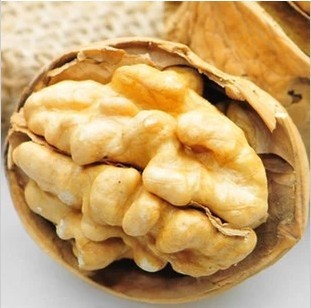
Pre sales questions for buyers:
1. Some buyers ask why the walnut skin looks like it's moldy?The walnut skins that we usually see are very clean because they have been cleaned by professional machines. They are not truly unprocessed walnuts. Local ethnic minorities only eat this kind of dirty skin because it is the most natural.
1. Some buyers ask why walnuts are bitter? This bitter taste comes from the inner lining of walnuts, although the taste is bitter, it has nutritional value. It has a bitter taste, a mild nature, and is non-toxic. It can strengthen the kidneys, astringent essence, diuretic and clear heat. For walnuts that are naturally dried without rinsing or drying, this bitter taste is too normal.
2. A customer asked, sometimes white threads can be seen inside walnut shells, is it moldy? Here, let me explain that white filaments are the most common mycelium. Walnuts are naturally dried, and during the process of wetting and drying, some mycelium will form inside the walnut to varying degrees. Only walnuts that have been naturally dried and not rinsed with liquid medicine will exhibit this phenomenon. The mycelium will not affect the quality of the walnut kernels, and the kernels themselves are not moldy or infested with insects. Buyers must understand this.
3. Many customers often ask, why are your Xinjiang walnuts so expensive? Our local walnuts are only a dozen yuan per kilogram, and they look much whiter than yours. It should be noted that Xinjiang has a dry and sunny climate, and walnuts are sold only after being air dried, resulting in a darker skin color. Moreover, Xinjiang's walnuts have the highest oil yield and high nutritional value, making it impossible to extract oil from inland walnuts. In Xinjiang, walnuts with slightly better quality are not as cheap as those priced at over ten yuan per kilogram.