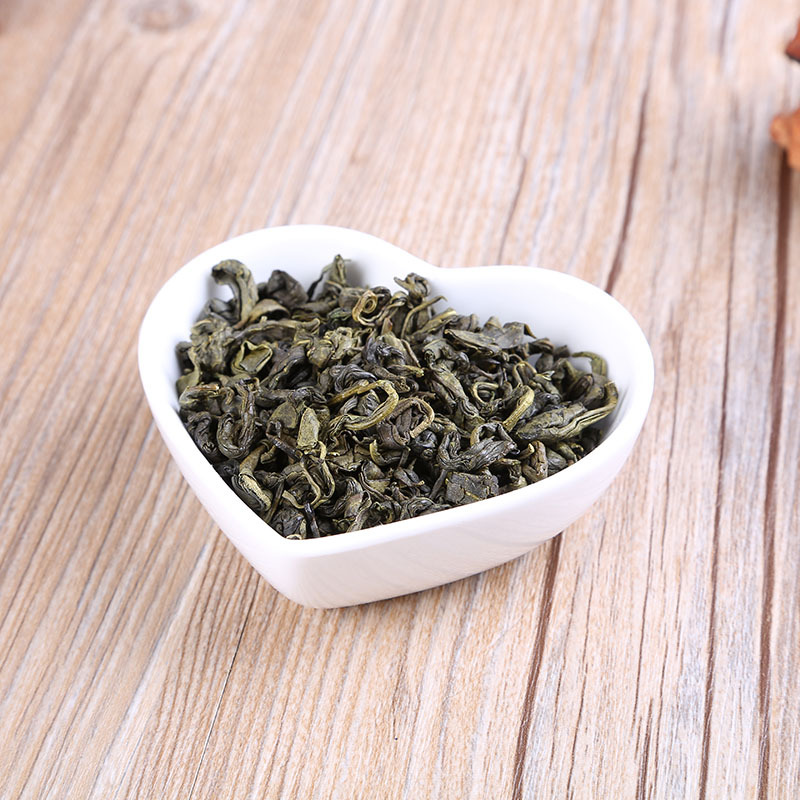
Stir fried green
Roasted green tea refers to the process of making tea wither in the pot with a slight fire, which can quickly evaporate tea moisture through manual rolling, block the process of tea fermentation, and completely retain the essence of tea juice. Stir frying green tea is a major leap in the history of tea making.
The main function of stir frying is to quickly and completely destroy the activity of enzymes:
To produce fresh leaves with moderate green color, the water and internal substances have been converted to a certain degree, meeting the internal requirements of oolong tea. It is necessary to promptly and rapidly inhibit enzymatic activity, otherwise, the green leaves will continue to "ferment" and turn excessively red, producing brown substances that are not conducive to the tea soup.
2. Continue to lose moisture and prepare the tea leaves for shaping:
Stir fry green leaves, the leaf temperature rapidly increases, the leaf cells expand due to heat, some vacuoles rupture, combined with water release and evaporation, some cell fluid adheres to the leaf surface, the leaf tissue shrinks and becomes soft, and the physical properties improve.
3. Promoted a series of positive changes in endoplasmic reticulum:
1. The remaining low boiling aromatic substances in the green tea further evaporate, reducing the green flavor, such as β, γ - enol, A, B hexenal, and cis green leaf alcohol. Some high boiling aromatic substances, such as benzyl alcohol, are exposed, and some trans green leaf alcohol combines with trace amounts of dimethyl sulfide to present a new tea aroma.
2. Chlorophyll reduction. According to analysis, the chlorophyll content in the green leaves of oolong tea is 0.57%, which is 0.52% after stir frying. At the same time, the composition ratio also changes, with more damage to the blue-green a and less damage to the yellow green chlorophyll b, resulting in a dark yellow green color in the stir fried green leaves.
3. Other pigments also undergo varying degrees of conversion. Anthocyanins are automatically oxidized into orange yellow or orange red products, anthocyanins lose their bitterness, and carotenoids are converted into aromatic substances such as purple ketone.
The content of amino acids, soluble sugars, and soluble pectin has increased.