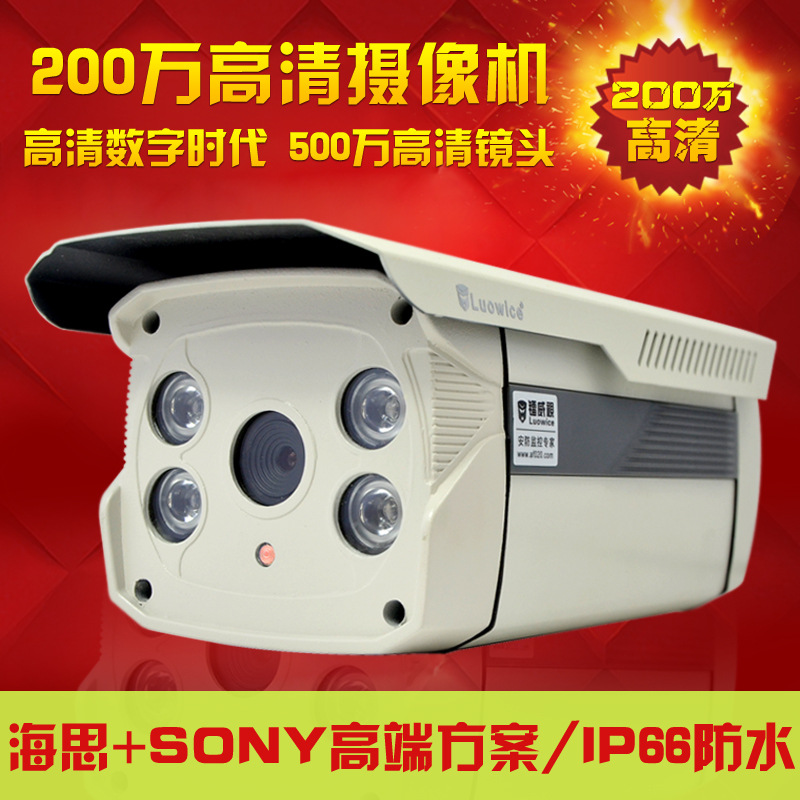
CCD and CMOS have been differentiated
Previously, there has been controversy over the superiority of CCD and CMOS in image sensors for cameras. The former has advantages in sensitivity and noise processing, while the latter's low cost is quite attractive. However, due to the development of CMOS following Moore's Law, its performance doubles every 18 months, while the development of CCD has encountered a bottleneck stage that is difficult to overcome. Industry experts say: "With the improvement of CMOS sensor processes, the low light effect has been greatly improved and can now be comparable to CCD. ”
In addition, CCD readout circuits using special manufacturing processes are relatively complex, making it difficult to integrate A/D conversion, signal processing, automatic gain control, precision amplification, and storage functions onto a single chip. Generally, multiple chips need to be combined to achieve this, and the higher the processing power, the larger the volume. With the help of large-scale integrated manufacturing processes, CMOS image sensors can easily integrate the above functions onto a single chip, and their volume can be made quite small. The higher the pixel count of high-definition network cameras, the higher the requirements for image processing capabilities. Due to the slow information reading speed and low integration of CCD, it is difficult to achieve full frame rate on high-definition network cameras with more than 2 million pixels, and it has high power consumption, heat generation, and cost. So there are few CCD cameras in the market with three million pixel network cameras, and almost all pixels are dominated by CMOS. ”
model |
LWS-AK3860 |
Video Compression |
H.264 |
image sensor |
2 million pixel high-definition CCD (25 frames per 2 million pixels) |
Support network |
Telecom, Netcom, Tietong, Great Wall P2P support across the entire network |
lens |
1/2.7 "3 million high-definition lens, standard 8mm (optional 6mm/12mm/16mm fixed aperture lens) |
Day night transition |
Dual filter automatic switching |
Infrared light configuration |
4 imported infrared array lights |
Minimum illuminance (Lux) |
0Lux at F1.2 (when the infrared light is turned on) |
sensitivity |
1.0V/lux-sec (550nm) |
resolution |
2 million, 1980x1080, 1280 × 720 |
Maximum frame rate |
25fps@1980x1080 , 25fps@1280 Is the actual 200W of 720 frames per second true real-time at 25 frames per second |
bitstream |
32 Kbps – 8 Mbps |
video output |
1-channel video output |
Smart Video |
Motion detection (up to 16 detection areas) |
Alarm recording cache |
Optional 32g built-in curing electronic disk |
Alarm event |
Intelligent video and alarm input triggering, sent via email/FTP, locally stored (optional) |
Dual stream |
support |
Safety |
Password protection, administrator permission settings |
network interface |
10M/100M adaptive, RJ45 connector |
network protocol |
TCP, UDP, IP, HTTP, DHCP, RTP, RTSP, FTP, SMTP, DNS, DDNS, NTP,ICMP, IGMP, ARP,SIP |
SIP/VoIP support |
N/A |
Working temperature/humidity |
Temperature -25 ° C -45 ° C Humidity: 10-90% relative humidity (without condensation) |
power adapter |
Output: 12VDC/2A; Input: 100-240VAC, 50-60Hz |